Where desert meets sea
Nature and wildlife in Rocky Point.
Explore CEDO, tide pools, Morúa Estuary, oyster farms, marine life, protected desert, and the coastal sand dunes responsibly.
Explore the guide ↓Explore responsibly
Protect what makes Rocky Point extraordinary.
The northern Sea of Cortez and Sonoran Desert support delicate habitats. Good visits minimize disturbance and leave every place as it was found.
CEDO Intercultural
The Intercultural Center for the Study of Deserts and Oceans in Las Conchas focuses on the northern Gulf of California and surrounding desert. Its Natural History Talk is a helpful introduction to the region.
- Contact CEDO before visiting; programs and public access can change.
- Support conservation and follow guide instructions.
Explore the tide pools
Rocky shorelines around Las Conchas and Mirador can reveal intertidal life at low tide. Step carefully, do not remove animals, and return overturned rocks gently.
- Check the tide before leaving.
- Wear secure shoes with good traction.
- Leave shells occupied by living animals.
Morúa Estuary wildlife
Morúa Estuary is important habitat for shorebirds, migratory birds, fish, and other coastal species. Visit with a knowledgeable guide where possible and avoid driving across sensitive tidal areas.
Explore the Estuary Xperience ↗Visit El Barco oyster farm
El Barco at Morúa Estuary combines sustainable aquaculture, local food, and coastal scenery. Educational visits and meals should be confirmed in advance.
- Confirm reservations and road conditions.
- Soft sand and tides can make access difficult.
- Carry cash when advised by the operator.
Become an oyster farmer for a day
CEDO's Oyster Xperience introduces participants to oyster cultivation, working farm tasks, and the ecology that supports this local livelihood.
Explore the Oyster Xperience ↗Acuario Peñasco
The local aquarium has historically introduced visitors to regional marine species. A government rehabilitation project was announced in 2026, so confirm whether the facility is open before visiting.
Rocky Point sand dunes
The coastal and desert dunes are living habitat, not empty recreation space. Enjoy distant views, photography, or an authorized guided experience while staying off protected vegetation and closed areas.
- Use only legal, established access.
- Do not create new vehicle tracks.
- Carry water and avoid extreme midday heat.
Sea of Cortez wildlife
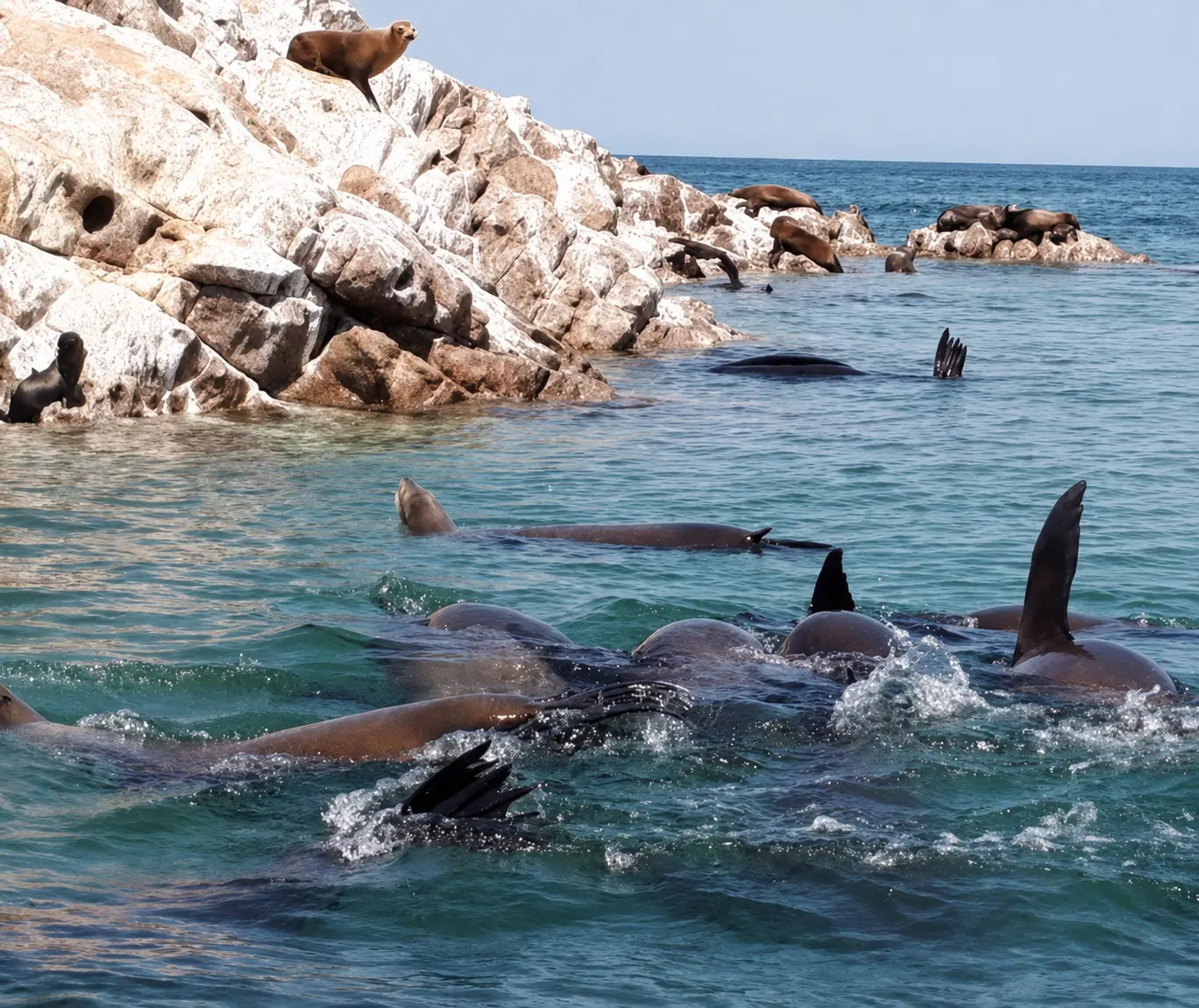
Depending on season and location, visitors may see dolphins, sea lions, whales, pelicans, herons, gulls, rays, and many fish species. Wildlife sightings are never guaranteed.
Explore the Bird Island guide ↗El Pinacate and Schuk Toak
Extend the nature experience inland to volcanic craters, lava fields, desert plants, wildlife, dunes, and the Schuk Toak Visitor Center.
Explore the Pinacate Xperience ↗Campo La Salina
Northwest of Puerto Peñasco, an immense white natural salar meets Bahía de Adair’s freshwater pools, tidal habitat, undeveloped beaches, and Sonoran Desert. The landscape is also sacred to the Tohono O’odham.
- Arrange the visit with a local host.
- Enter only approved tourism areas.
- Protect wildlife habitat and culturally sensitive places.
Plan ahead
Programs, access, road conditions, tides, and facility status can change. Contact CEDO, reserve staff, aquarium management, or oyster-farm operators before making a special trip.
Last Updated: August 23, 2026
Keep planning
Plan Your Trip
Keep planning
Build your complete Rocky Point trip.
Continue with local beaches, restaurants, resorts, travel information, and memorable Sea of Cortez experiences.
See all travel guides →